

Many people find themselves wondering whether they are visiting the dentist often enough — or perhaps questioning whether an appointment is really necessary when they have no obvious pain or obvious dental problems. It is a genuinely common question, and one that does not always have a single straightforward answer.
Understanding how often you should visit the dentist depends on a range of individual factors, including your current oral health, your dental history, your age, and any specific conditions that may affect your teeth or gums. The idea that everyone needs a dental check-up exactly every six months is widely held, but in practice, the recommended frequency of dental check-ups varies from person to person.
This article explores the purpose of regular dental check-ups, what happens during a routine dental examination, and what factors a dentist considers when advising on how frequently you should attend. It is intended to help you understand why preventive dental care matters — and when speaking with a dental professional may be worthwhile.
For most adults in the UK, dental check-ups are recommended every six to twenty-four months, depending on individual oral health needs. Those with a higher risk of dental problems — such as gum disease, frequent decay, or certain medical conditions — may benefit from more frequent appointments. A dentist can advise on the most appropriate interval for you.
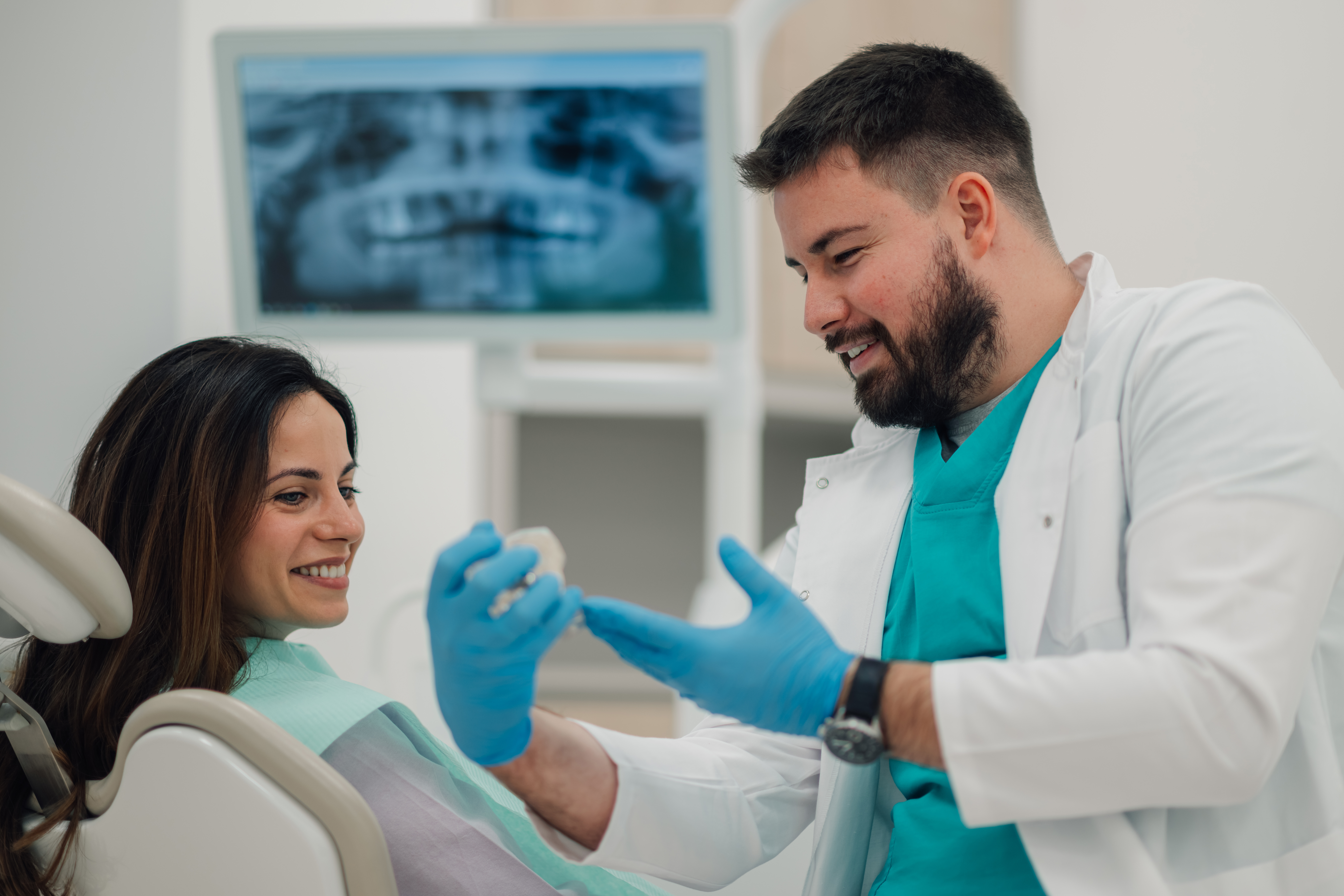
A routine dental check-up is more than a quick look at your teeth. During a standard examination, a dentist will typically assess:
The check-up is also an opportunity to ask questions, raise any concerns, and receive personalised advice on maintaining your oral health between appointments.
The notion of a universal six-monthly dental appointment is deeply embedded in public awareness, but guidance from NHS England and the National Institute for Health and Care Excellence (NICE) has long suggested a more tailored approach. NICE clinical guidelines indicate that dental recall intervals should be based on individual risk assessment rather than a fixed schedule applied to everyone.
In practice, this means:
Only a dentist can assess your individual risk profile and advise on the most appropriate interval for your circumstances.
One of the most important reasons for attending regular dental check-ups is the opportunity for early detection of dental problems. Many dental conditions develop gradually and may not cause noticeable symptoms in their early stages.
Tooth decay begins when bacteria in the mouth produce acids that gradually dissolve the outer layer of the tooth, known as enamel. In the early stages, decay may be entirely painless. As it progresses through the enamel and into the underlying dentine, the tooth may become sensitive. If left untreated, decay can eventually reach the dental pulp — the soft tissue at the centre of the tooth containing nerves and blood vessels — at which point more complex treatment may become necessary.
When decay is identified early, treatment options tend to be more straightforward and less invasive. In some early cases, remineralisation through improved oral hygiene and fluoride use may be sufficient. In others, a small restoration may be all that is needed.
Gum disease — ranging from mild gingivitis (gum inflammation) to the more advanced periodontitis — is one of the most common dental conditions in the UK. In its early stages, gum disease may present with bleeding during brushing or mild gum soreness. These symptoms are frequently overlooked or attributed to brushing too hard.
If gum disease progresses without appropriate treatment, it can affect the bone and supporting structures around the teeth. Regular dental examinations allow clinicians to monitor gum health, identify early changes, and recommend appropriate care — which may include improved oral hygiene instruction, professional cleaning, or professional assessment and management options for gum disease progression where necessary.
Dentists are often among the first clinicians to identify early signs of changes to the soft tissues of the mouth. Oral cancer screening during routine check-ups involves a visual examination of the lips, tongue, cheeks, palate, and throat. As with most conditions, early identification is associated with a broader range of management options.
Several factors can influence the frequency of dental check-ups that may be appropriate for you:
Discussing these factors with a dentist allows them to recommend a recall interval suited to your individual circumstances.
Irregular attendance does not automatically mean that problems will develop. However, dental conditions that develop gradually are more likely to be identified earlier — and managed more conservatively — when check-ups are maintained.
Delays between appointments can mean that minor issues, such as early decay or the early stages of gum disease, have longer to progress before being identified. This may result in more complex treatment being required at a later stage, which could include larger restorations for tooth decay that has progressed beyond early-stage intervention, or periodontal intervention.
This is not intended to cause concern. It is simply a practical consideration in favour of maintaining a reasonable schedule of professional dental care.
Outside of routine check-ups, there are situations where speaking with a dentist sooner may be appropriate:
If you experience severe swelling, difficulty breathing or swallowing, or signs of a spreading dental infection, this requires urgent attention rather than a routine appointment.
Regular dental check-ups are most effective when combined with a good daily oral hygiene routine:
For those interested in understanding cosmetic options that may be considered alongside preventive care — such as dentist-supervised teeth whitening for discolouration and lifestyle staining — these are areas worth exploring with a dental professional once a stable foundation of good oral health is established.
The six-monthly dental check-up has become widely associated with routine dental care, but clinical guidance in the UK suggests the interval should be personalised. NICE guidelines indicate that the gap between check-ups should be based on individual risk factors rather than a fixed schedule. Some patients may genuinely benefit from six-monthly appointments; others with a lower risk profile may be appropriately seen less frequently. Your dentist is best placed to advise on the right interval for you.
Yes — and attending when you have no obvious symptoms is precisely the purpose of a preventive dental appointment. Many dental problems, including early-stage decay and gum disease, develop without causing pain. Regular examinations allow issues to be identified and managed before they become more significant. Routine check-ups also provide an opportunity for oral cancer screening and personalised oral health advice.
A dental check-up is a clinical examination carried out by a dentist, who will assess the health of your teeth, gums, existing restorations, bite, and soft tissues. A hygiene appointment — carried out by a dental hygienist or therapist — focuses on professional cleaning of the teeth, removing plaque and calculus, and providing oral hygiene advice. Many patients benefit from attending both, often at the same visit or coordinated appointments. Your dental team can advise on what is appropriate for your circumstances.
The British Society of Paediatric Dentistry and NHS guidance recommend that children see a dentist as soon as their first teeth appear, or by their first birthday at the latest. Early dental visits allow the dentist to monitor dental development, advise parents on diet and oral hygiene, apply preventive treatments such as fluoride varnish where appropriate, and help children become familiar with the dental environment. Establishing this routine early can support good dental habits throughout life.
If you have not attended a dental check-up for some time, it is worth booking an appointment for an initial assessment. The dentist will examine your teeth and gums, take relevant X-rays if needed, and provide an overview of your current dental health. Any areas of concern can be identified and discussed, and a plan for addressing them can be developed. There is no need to feel anxious — dental teams are experienced in welcoming patients who have not attended for some time and will work with you at your own pace.
Regular dental attendance supports the early identification of dental problems, which in turn means that treatment options at the time of detection may be less complex. For example, early-stage decay may be manageable with a small filling, whereas more advanced decay may require a larger restoration, a dental crown, or in some cases root canal treatment for deep decay affecting the dental pulp if the pulp has been affected. There are no guarantees, but maintaining regular dental care is generally considered a sound preventive approach.
Understanding how often you should visit the dentist is not about following a universal rule — it is about recognising that oral health is individual. For some people, a check-up every twelve months may be entirely appropriate; for others, more frequent appointments may be recommended based on their dental history and risk factors. What remains consistent is the value of regular professional dental care as part of a broader approach to maintaining good oral health.
Dental symptoms and treatment options should always be assessed individually during a clinical examination. If you have concerns about your oral health, or if you are unsure when you last attended a check-up, speaking with a qualified dental professional is a sensible first step.
Disclaimer: This article is intended for general educational purposes only and does not constitute personalised dental advice. Individual diagnosis and treatment recommendations require a clinical examination by a qualified dental professional.
Written Date: 17 September 2026 Next Review Date: 17 September 2027
Why do GPs ask about oral health in diabetes and c...

Understand what executive health assessments can a...
Unsure whether to book a GP appointment or use a w...

Explore how oral inflammation and wider health can...

Understand common causes of gum sensitivity and pr...

Wondering why your GP recommends blood tests early...

5 AVE MARIA LANE, ST PAUL'S, LONDON EC4M 7AQ
Mon - Fri 9AM - 6PM
Sat - Sun 10AM - 2PM
All tests and screenings are booked online or by phone — no referral and no registration needed. Same-day appointments are usually available.
2026 © PRIVATEGPS.LONDON. All rights reserved.